
Technical Analysis Course: Learn Forex Trading with a Structured Approach
Forex trading is not simply about guessing whether a currency pair will move up or down. Successful trading requires an understanding of market behavior, price movements, risk, and the factors that influence trading decisions. For beginners, the biggest challenge is often knowing where to start and what to learn first.
A structured technical analysis course can help traders build these fundamentals step by step. At Mianwali Forex Academy, the learning approach focuses on understanding charts, market structure, price action, trading psychology, and risk management rather than relying on random signals or guesses.
What Is Technical Analysis in Forex Trading?
Technical analysis is the study of price movements and market data through charts. Traders use historical price behavior to identify patterns, trends, important levels, and possible trading setups.
Instead of entering a trade simply because the price "looks like it will go up," technical analysis encourages traders to ask questions such as:
- What is the current market trend?
- Where are important support and resistance levels?
- Is the market making higher highs and higher lows?
- Is there a potential reversal or continuation setup?
- Where should the trade be invalidated?
- How much risk should be taken?
Learning these concepts gives traders a framework for analyzing the market before making a decision.
Why Learn Technical Analysis?
Many new traders enter Forex after watching random trading videos or following signals on social media. This can create confusion because different traders may use completely different approaches.
A structured course allows beginners to learn concepts in an organized sequence. At Mianwali Forex Academy, the curriculum covers areas such as Price Action Trading, smart money concepts, candle stick patterns, support and resistance mapping, and advanced market structure.
The goal is not to encourage traders to take more trades. Instead, the emphasis is on developing the knowledge required to analyze a setup and understand the reasoning behind a trading decision.
Start With Price Action Trading
Price action is one of the fundamental concepts in technical analysis. It focuses on studying the movement of price directly through charts rather than depending entirely on indicators.
Traders can study:
- Trends and market direction
- Swing highs and swing lows
- Breakouts and breakdowns
- Reversals
- Continuation patterns
- Important price levels
- Reactions around support and resistance
Understanding price action can make charts easier to interpret because traders begin to focus on how price behaves rather than simply looking for a signal to enter.
Understanding Smart Money Concepts
Another area covered in modern Forex education is smart money concepts. These concepts focus on understanding market structure, liquidity, institutional-style price behavior, and areas where significant buying or selling activity may occur.
For beginners, these concepts can initially appear complicated. That is why they are more useful when learned alongside basic market structure and price action rather than treated as a shortcut to finding trades.
The important point is to understand the logic behind a setup instead of memorizing terminology.
Candlestick Patterns and Market Behavior
Candlesticks provide information about price movement during a particular period. Each candle can show the opening price, closing price, high, and low.
Learning candlestick patterns can help traders understand potential changes in buying and selling pressure.
Some commonly studied formations include:
- Pin bars
- Engulfing candles
- Doji formations
- Rejection candles
- Inside bars
However, a candlestick should not automatically be treated as a trading signal. Its location and the surrounding market structure matter. A rejection candle at an important level can have a different meaning from the same candle appearing randomly in the middle of a range.
This is why candlestick analysis works best when combined with broader technical analysis.
Support and Resistance Mapping
Support and resistance are among the most widely used concepts in technical analysis.
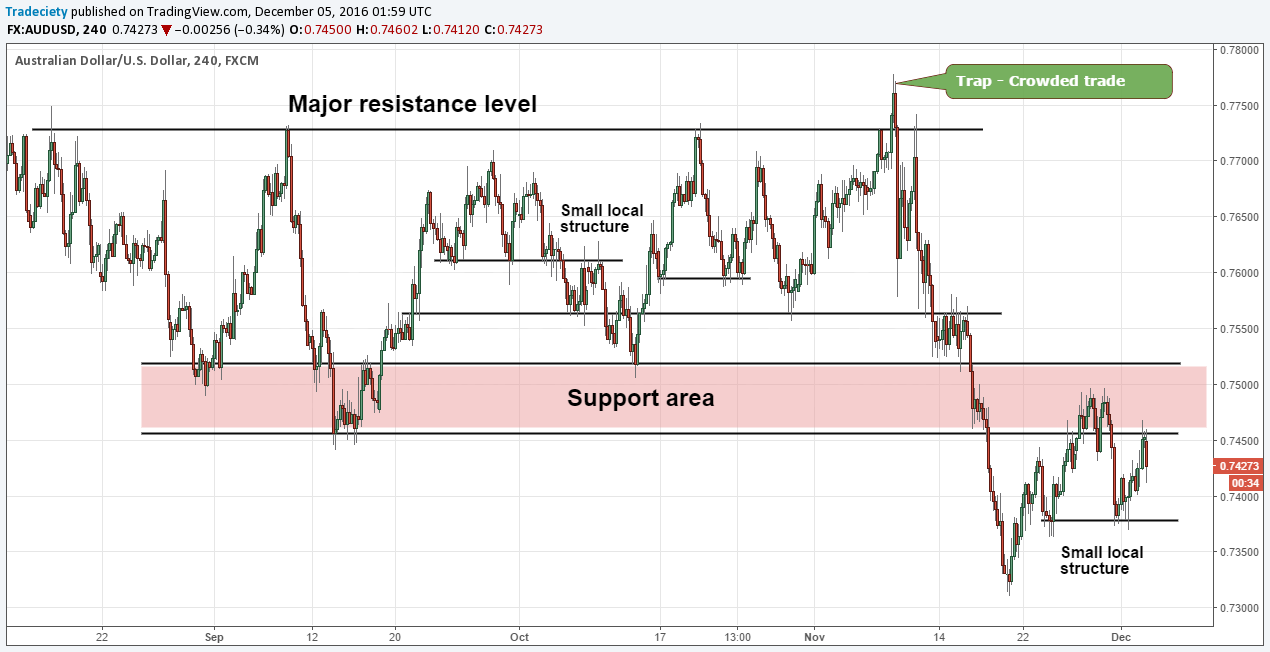
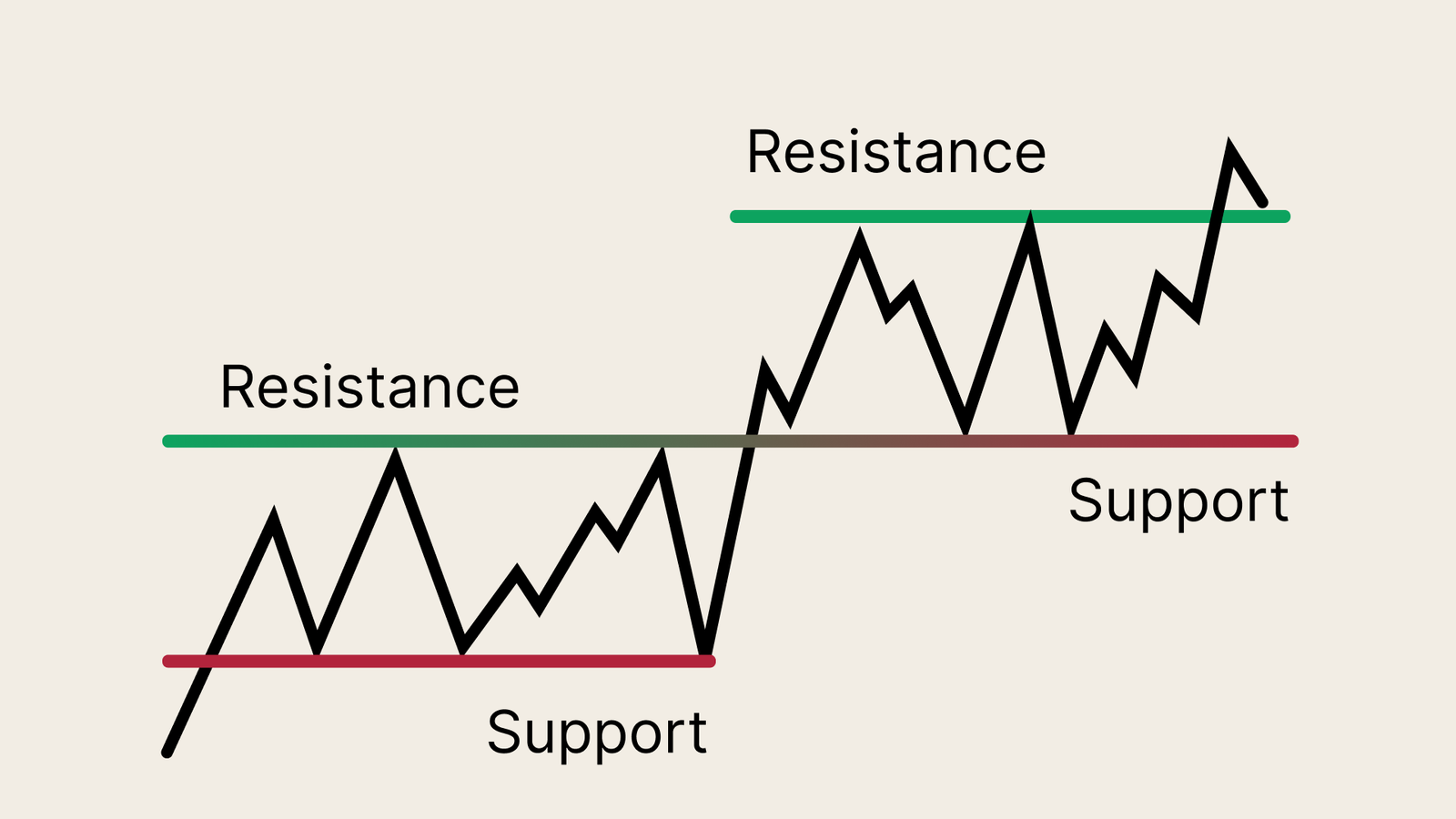
Support refers to an area where buying interest has historically helped prevent or slow a decline, while resistance refers to an area where selling pressure has previously affected upward movement.
Learning support and resistance mapping can help traders identify areas where price may react.
Rather than drawing dozens of lines across a chart, traders can learn to identify significant zones and observe how price behaves when it reaches them.
Understanding Advanced Market Structure
Market structure provides a broader picture of price movement.
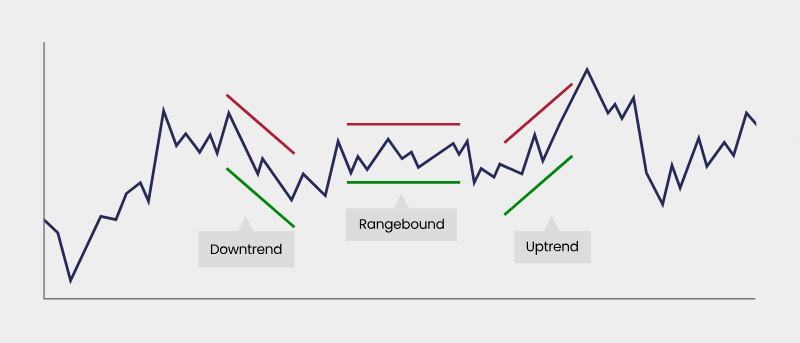
For example, an uptrend may consist of higher highs and higher lows, while a downtrend may involve lower highs and lower lows. Changes in this structure can provide information about whether the existing trend is continuing or potentially changing.
Advanced market structure builds on these basic ideas and can include concepts such as:
- Break of structure
- Change of character
- Liquidity
- Market swings
- Trend continuation
- Potential reversals
Learning market structure can help traders move away from isolated candle-by-candle decisions and instead understand the larger movement of the market.
Risk Management in Forex
Technical knowledge alone is not enough. Risk managment in Forex is an essential part of responsible trading.
Even a well-analyzed trade can move against the trader. Markets are uncertain, and no technical setup guarantees a particular outcome.
Basic risk-management principles may include:
- Defining risk before entering a trade
- Using an appropriate position size
- Setting a stop-loss where the trading idea is invalidated
- Avoiding excessive leverage
- Not risking money that cannot be afforded to lose
- Maintaining consistency instead of trying to recover losses through larger trades
A trader's objective should not be to win every trade. The focus should be on managing risk and following a defined trading plan.
The Importance of Trading Psychology
One of the most overlooked parts of Forex education is trading psychology.
A trader may understand market structure perfectly but still make poor decisions because of emotions such as:
- Fear of missing out
- Revenge trading
- Greed
- Impatience
- Fear after a loss
- Overconfidence after a winning trade
Developing psychological discipline means learning to follow a trading plan even when the market does not behave as expected.
This is why trading psychology should be studied alongside technical skills rather than treated as something separate.
Learning to Trade Gold (XAUUSD)
Gold, commonly represented as XAUUSD in the Forex market, is another instrument that attracts many traders because of its price movement and volatility.
However, volatility can work both ways. Larger price movements can create opportunities as well as larger risks.
Anyone wanting to trade gold (XAUUSD) should first understand the instrument, its volatility, market structure, risk requirements, and the effect of major economic events.
Learning gold trading step by step is more useful than entering trades simply because XAUUSD is moving quickly.
Live Mentoring and Practical Learning
Reading about technical analysis is different from applying it to a live chart.
Live mentoring sessions can provide an opportunity for learners to observe how market analysis is performed and how different technical concepts can be combined into a trading plan.
At Mianwali Forex Academy, learners can work through trading concepts progressively, from foundational chart analysis to more advanced approaches.
The purpose of mentoring should be to improve understanding and decision-making rather than create dependence on someone else's trade calls.
From Beginner to Professional Trader
A person does not become a professional trader simply by completing a course. Trading is a skill that requires continued learning, practice, documentation, and discipline.
For complete beginners, the learning journey can start with:
- Understanding Forex fundamentals
- Learning how charts work
- Studying candlesticks
- Understanding support and resistance
- Learning market structure
- Studying price action
- Developing a trading strategy
- Learning risk management
- Practicing through historical charts or a demo environment
- Developing psychological discipline
Over time, traders can refine their approach based on experience and data.
Building Forex Trading Strategies
The purpose of learning technical analysis is not simply to collect different concepts. Traders should eventually learn how to combine relevant concepts into a clear trading framework.
For example, a strategy might define:
- Which market or instrument to trade
- Which timeframe to analyze
- What market conditions are required
- What constitutes an entry
- Where the setup becomes invalid
- How risk will be managed
- When profits or losses will be recorded
This creates a structured approach instead of entering trades based on impulse.
Why Choose Mianwali Forex Academy?
Mianwali Forex Academy provides Forex education for learners who want to develop their understanding from the basics through more advanced trading concepts.
The academy's curriculum includes technical analysis, price action, smart money concepts, candlestick analysis, support and resistance, market structure, risk management, and trading psychology.
Whether you are searching for Forex trading classes near me or prefer an online Forex trading course, learning through a structured curriculum can make the process easier to follow.
The academy also emphasizes learning and practical understanding rather than presenting Forex trading as a guaranteed source of income. Trading involves financial risk, and learners should understand those risks before committing real capital.
Final Thoughts
Forex trading requires more than finding an entry signal. A trader needs to understand market structure, price behavior, risk, and their own decision-making process.
A well-structured technical analysis course can provide the foundation needed to approach the market more systematically. From price action and candlestick patterns to support and resistance, smart money concepts,market structure, risk managment, and trading psychology, each concept contributes to a broader understanding of the market.
If you are starting from zero, focus first on learning the fundamentals. Practice what you learn, maintain realistic expectations, and never treat trading education as a guarantee of profit.
Mianwali Forex Academy aims to provide a structured learning environment for individuals who want to understand Forex trading as a skill and develop their knowledge step by step.

Contact us and enroll today!